Showing posts with label children's picture book. Show all posts

Friday, March 10, 2023

Everybody Counts!

Diversity is about embracing one another's uniqueness. - Ola Joseph 

While the word diversity may be difficult for children to understand the talented author/poet Matt Forrest Esenwine shares a simple way of understanding with his newly released nonfiction picture book, Everybody Counts.

celebrate-picture-books-picture-book-review-everybody-counts-cover-3

This fabulous children's picture book was launched on January 1, 2023. 

Everybody Counts! is a creative effort by the author to blend mathematics, art, story, and content together in order to emphasize the concept of diversity. Each page offers toddlers to Kindergarten children the opportunity to count in English and early elementary children to learn their numbers in foreign languages or perhaps their own language while gathering fun facts about different international countries and types of food.  

This book is an imaginative departure from the typical counting books created for young readers. The author's decision to include foods around the globe and numbers in different foreign languages adds to an immediate appeal for children and adults. Illustrator Emma Graham brings the book to life with bright colors and delightful images of animals enjoying foods from different countries. Everyone sits together at a large table and shares their country's foods. This image highlights the concept of diversity while honoring the words, "Everybody Counts".

Prior to the publication date, I asked Matt to respond to a few questions to unveil his backstory.

1. Matt how did your book come to be? 

I wrote the original rough draft way back in June 2013 and began sending it out on submissions a few months later, so it's been a while since I've thought about what inspired me to write it! As I recall, the phrase, "everybody counts" popped into my head for some reason and I immediately noticed a double entendre: that everybody matters and that everybody literally counts numbers. So I think the concept came about pretty quickly, once I figured out a way to have children of different ethnicities teaching the reader, which was using food.

2. What age group are you targeting?
I hope parents and educators recognize that it can appeal to a broad age group! Young children who are only 4 or 5 can understand the process of counting and can begin to see how others in the world do something they themselves do:  count, eat food, and spend time with family. Meanwhile, older elementary readers, 6-9, can read the book on their own and study the numbers more closely and practice memorization, if they choose.

3. Have you had experience reading the book to children yet? 
I hope to share it with at least a few schools in a couple weeks for World Read Aloud Day on February 1st. 

Throughout the book, each page shares a rhyming introduction and informative content about the country being featured beside numbers 1-10 in the foreign language of each country highlighted. Due to Matt's research skills, we find out what is the luckiest number from one to ten in the Chinese language and what is a favorite drink in India. This book could be an incentive for older children to research on their own and create their own booklet with researched facts, a poem similar to Matt's ending poem (see below), and their favorite numbers. Matt originally created this poem as a summary emphasizing the double intent of the book, that everybody counts.

Come join your friends and make some new;
eat up and have a drink!
The world is just outside your door
and closer than you think.

You might see foods you’ve never tried,
hear words you can’t pronounce,
you might meet kids you’ve never known, but…
everybody counts!

– © 2013, Matt Forrest Esenwine


Teachers, Parents, ESL specialists, and Children:
This nonfiction picture book is sure to be a unique crowd-pleaser!

Come sit at the international table for a dazzling array of foods from different countries while counting in English and various languages because everybody literally and figurately counts.


What better way to learn numbers in English while honoring other countries, their language, and foods, than through this imaginative picture book! Thank you, Matt, for your incredible talent and The Little Fig company for the publication of this delightful book. experience. I can see why Matt would choose this book to read on World Read Aloud Day.

***************************************

Today is the Poetry Friday Roundup at Heidi Mordhorst's blog, my juicy little universe


Join the fun of reading a range of poetry.


Thursday, February 13, 2020

"After Dark" Blog Tour & Giveaway

Welcome to the 2nd Stop on the After Dark Blog Tour!
Today, I am delighted to present David L. Harrison's imaginative book to readers
and offer a book giveaway.  

Have you ever thought about what happens in the outside world of animals after dark? Lately, my family has been following the antics of three feral cats in our neighborhood. Reading David L. Harrison's beautifully written children's book, After Dark-Poems About Nocturnal Animals, has given me insight into the world of animals who are awake while humans sleep.  

As you can see by the above book cover, this book offers a delightful look at animals living in the wild. David Harrison masterfully weaves a story about the nocturnal world of animals through a series of poems while illustrator Stephanie Laberis offers vivid images to capture a nighttime awakening. Each page of the book builds on the other to intrigue children, adds to their background knowledge of nocturnal animals, and sparks interest in blending poetry with science.

I thank David, Word Song, and Boyds Mill Press & Kane for offering this type of reading experience for young readers. Within the pages of the book and the back cover, you will find twenty-two descriptive, lyrical poems, two interesting fact pages, and an array of artwork that pops out from a dark-night scene. After Dark is a wonderful book to spark a child's imagination while focusing on information about nighttime animals. 

Giveaway News:
Readers within the United States can enter a drawing to win David L. Harrison's latest book by commenting about the book in the space below. You can also use Twitter, Facebook, Instagram, or Linkedin as your platform to share your thoughts. Please add my Twitter handle, cvarsalona or Facebook name, Carol Varsalona, so I can be sure to enter your name in the raffle drawing. As Kathy Temean says in her February 11th blog post  that was the first stop on the #After DarkBlogTour, "Sharing on Facebook, Twitter, reblogging really helps spread the word for a new book." 
The deadline for commenting is February 16th at 8 pm EST.

Quick Peek Inside The Book:
Curious children may wonder what happens at nighttime after they are tucked in bed. Nocturnal animals awaken. In After Dark, poet David L. Harrison and Illustrator Stephanie Laberis bring the world of selected nocturnal animals to life. We see animals being mischievous, playful, or on the prowl for food within twenty-two descriptive, lyrical poems. In addition, there are two interesting fact pages to broaden children's knowledge base of nocturnal animals. Laberis' artwork pops out from darkened night scenes, introducing readers to the amazing world of nocturnal animals.  

On the back cover, David Harrison features a raccoon whom he calls an escape artist. In a whimsical way, the raccoon is shown pilfering food and hiding. I can relate to Harrison's description of the raccoon. This nighttime creature has been spotted in my neighborhood for years. Each time a crafty rascal is spotted, he quickly returns to his home in the sewer system with his food loot. Before he reaches his destination, he topples over garbage pails leaving a mess for humans.


My Burning Questions for Author/Poet David L. Harrison:
Because I am curious about the why behind writing a children's book via the lens of poetry, I asked David L. Harrison, "How did you conjure up such an inventive collection of poems about what happens in the quiet of night?
The tone of a book needs to be set with the first words and maintained consistently throughout. And after I finish my work the artist must find that same groove and stay in it. My mood here, what I was feeling and wanting to convey to young readers, is that after dark is a busy time for wildlife. Creatures of the night open their eyes, sniff the air, and venture forth from nests, dens, and tunnels to begin their evening’s activities. The same is true of many kinds of insects, spiders, and scorpions. No matter where we live our nights are populated by a bustling community of creatures, many of them seldom observed by humans, especially young humans with early bedtimes. 
My approach was to show my respect for the individual creatures I chose to include and to fit my words to their own particular lifestyle. For the wolf I focused on a cub. You wild thing./You bouncy pup,/roughhousing/with your siblings. The cougar Pads on soft,/silent feet./Leaves few clues/to where he’s been. The screech owl, who doesn’t bother to build a nest, advises, Don’t waste effort/with twigs and thatch./They’re only eggs./They’re going to hatch. The slug poem needed to sound like a slug with its slow, sticky gait.  Along a path of slime/you softly flow. The firefly blinks around the yard looking for love.  Firefly flashes/polka dot the lawn./Blinker off…/Blinker on.

While dabbling in different poetic formats myself, I inquired, "Are all the poems in your book based on a specific format?"
Poetry ranges from doggerel to sublime. At its worst it should be shot on sight. At its best it protects our language and reminds writer and reader that every word has meaning and only the right one will do for the purpose at hand. Now and then when I finish a poem that works I sit back and brag on myself. I nod and smile and say, “That’s really good, Harrison. Way to go!” Most of the time that doesn’t happen. And some of the time I throw out the work and start again. In the end I wind up with a collection of offerings for my reader that include numerous poetic devices put there to make his or her experience more enjoyable and meaningful. I like interior rhyme, near rhyme, free verse, traditional formats -- couplets, triplets, ballads -- but sometimes I find myself in unknown (to me) territory when I’m looking for a unique way to express what I want to say. At such times I’m not sure if I’ve just invented a new form or stumbled across an existing one unknown to me. Either way, if it works, I go with it. 
In a Hurry is an example of a poem that will engage children with its rhyming format
and a title that is appropriately visualized through Laberis' illustration.

I encourage my 2 1/2-year-old granddaughter who loves books to talk about a book after a read aloud, so I asked David, "What would you like my little reader to take away from your fanciful collection of animal poems?  
Your granddaughter is going to love the pictures. Stephanie (Steph) Laberis is a gifted artist who also develops characters for animation. I hope your little one will follow the general gist of the poems though a fuller understanding may have to wait until she’s a bit older. Each time she hears the words, a little more of their meaning will be clearer. The wolf cub might grow up to be a leader. The raccoon looks adorable, but she is a sly old thief. We have much to learn from our fellow creatures so the younger we start thinking about them the better.
About the Author:
David L. Harrison, prolific poet and children's book author, stated in the Reader - The Journal of the Arkansas Reading Association, "Authors think: reader, reader, reader. How can I entice my reader to giggle? Think? Feel? Turn the page." The book, After Dark, Poems About Nocturnal Animals does this. Any child who loves to read will eagerly want to turn each page.

I look forward to sharing David L. Harrison's book, After Dark, with my granddaughter. I will travel to Virginia next week with the book in hand. After a read aloud of After Dark, Sierra will most likely point to each illustration and retell the story about the nocturnal animals she sees. Reading with a grandchild is special. 

Thank you for joining me for a sneak preview of David L. Harrison's After Dark. This book will provide children with the opportunity to engage in the act of reading while building a wealth of information and language.

Please follow the #AfterDarkBookTour. Many of the blog tour spots provide an opportunity to win a copy of After Dark like I am offering tonight. You have until Sunday, February 16 at 8 pm EST to enter the giveaway.  Be sure to include my handle or name when responding on social media so that you will be included in the raffle for a copy of the book.
Keep reading, #BooksMatter!


It's almost time for the Poetry Friday Roundup at Teacher Dance. Thank you to a wonderful writing colleague and poet, Linda Baie, for hosting. Enjoy all the poetic goodness awaiting you at Linda's blog site!

Monday, January 20, 2020

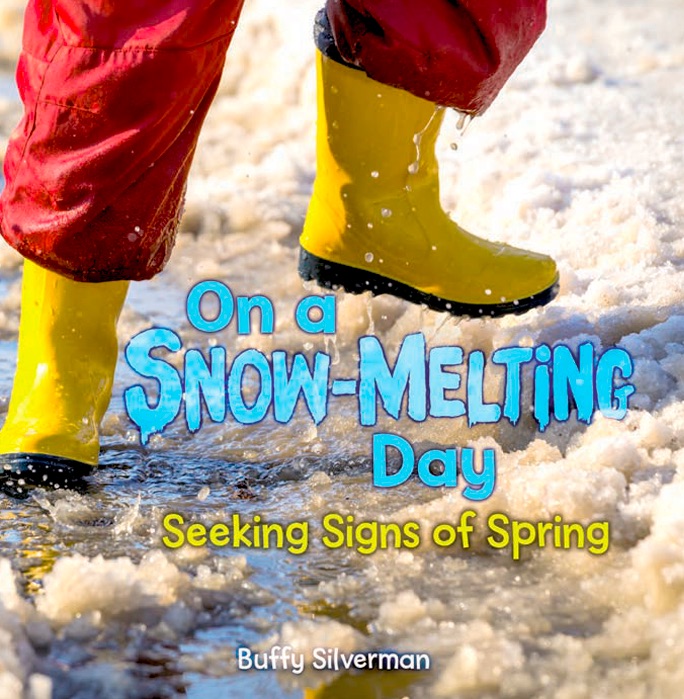
Featuring "On a Snow-Melting Day: Seeking Signs of Spring"

Yesterday was a slip-sloppy, snow-melting day with bright sunshine on Long Island. 
Little children donned their boots to romp in snow-sloshing puddles while I choose to review a delightful new children's book. 
On a Snow-Melting Day: Seeking Signs of Spring, written by Buffy Silverman nature poet, photographer, and author of 90 nonfiction books for children, is a delightful book on nature preparing for spring's arrival. It debuts on February 4, 2020. 

Every page of the book is filled with bright, vivid nature photographs on a snow-melting, awaiting-spring day. Strong verbs and descriptive adjectives take on a playful nature as engaging rhyming brings to life a nature walk. Children eager to find out more about what they see on each page have access to back matter and a glossary at the end of the book. This coupled with a poetic, rhythmic flow of thoughts makes this book a power=packed opportunity to broaden content knowledge and vocabulary. 

While On a Snow-Melting Day is geared for children ages 3-8, I believe that my 2 1/2-year-old granddaughter will enjoy finger-pointing her way through the snow-melting day adventure. I can't wait to introduce her to this beautifully-designed story that has the feel of a poetic photo-journal for children. Whether you live in climates that share the wonders of late winter snow or not, this book encourages children to use their imagination to uncover the delights of nature and turnover of seasons. As Buffy says, "The world comes to life...on a snow-melting day."

Author's Thoughts:  
On a Snow-Melting Day started as an idea for StoryStorm 2018, in response to a blog post that encouraged writers to pay attention to what’s around them. Here’s what I wrote in my notebook:
                             It was a drip droppy  
                                   slip sloppy
                                          snow melting day 
Then, I wrote a couple more lines about mist rising, boots sinking in slush, puddles growing on the lake. My notes continued: Is there a story here or just a poem? Initially, I thought the image in my head was more of a poem than ta story idea, but I later decided to explore the idea more fully, I researched what different animals might be doing on a snow-melting day and tried to paint a picture of the landscape getting closer and closer to spring.             

Knowing that Buffy is a fabulous nature photographer, I was interested if she took all of the photos in the book. She replied:
Most of the photographs are stock photographs from professional photographers. But I did offer some of my own and was thrilled that they chose to include three of them.

Librarians, teachers, parents, enhance your personal or public library with this bright and vibrant story of a snow-melting day. You may also want to take your class outside with their notebooks to observe their natural surroundings with an option to write their thoughts on a winter-watching day. You can access the book on NetGallery and read reviews on Goodreads. 

Do you know that February 5th is World Read Aloud Day?
I  am looking forward to reading aloud On a Snow-Melting Day to my granddaughters. I hope you will join World Read Aloud Day, too, because Reading Matters! 

I also invite you to join me at #NYEDChat on January 27, 2020 from 8-8:30 pm EST for a Twitter chat on "the Year of Reading". My guest moderators, Peter H. Reynolds, Paul Reynolds, and Susan Verde, children book authors, are eager to chat with all interested. I plan on extending an invitation to librarians, educators, parents, students, and colleagues to celebrate the love of reading.

Thursday, October 10, 2019

Last Stop on "Finding Treasure" Blog Tour + Giveaway


Are you a collector?

If so, sit back and enjoy a peek into Michelle Schaub's delightful poetry book, FINDING TREASURE-A Collection of Collections, published by Charlesbridge on September 19th and creatively illustrated by Carmen Saldana. 

FINDING TREASURE takes the reader on a journey of discovery. The main character, an elementary child, is faced with a dilemma-how to destress about her upcoming show-and-tell assignment. In the first poem, My Collection Conundrum, the little girl worries about her homework that has the rest of the class excited. Carefully observe the illustration to see how accurately Carmen Saldana portrayed this scene.
What will our main character do? Through a series of clever rhyming poems, the story unfolds. The little girl visits different family members to find out what each one collects. Different perspectives are provided and one that tickled my fancy was Sissy's Snow Globes As a child, I loved to hold my Nonnie's snow globe and watch the flakes softly fall after each shake. I passed on my love for snow globes to my children and last Christmas to my granddaughter who received her mother's childhood snow globe. Sierra at age 1 1/2 years then was fascinated as she watched the "lacy flakes whirl and twirl". 
Michelle's poem not only beautifully describes Sissy's snow globes but organizes her thoughts as if they were falling like snowflakes. In addition, the alliteration and rhyme scheme, create a memorable stand-alone poem that works well within the storyline.  

Another poem children will enjoy reading is Auntie Kate's Vanity PL8TS. Even adults will like to decode the vanity license plates on the wall. I had fun deciphering the plates Michelle shared. I wanted to add my vanity plate, ELA READ,  that I designed when I became a districtwide director of literacy but unfortunately it does not fit the rhyme scheme. This poem is a clever one.
Image result for finding treasure by schaub
The main character visits other people beyond her family to check out their collections. Her friend Meg has a black and white menagerie of collectibles. Her neighbor Rogers has a yard full of birdhouses and the mail carrier cache is an interesting collection that I did not figure out until the end of the poem.  Lastly, when I read Collecting Star?, I paused to savor the beauty of the illustration and the thought of sparks of starlight dancing in the sky.  
When finished reading the poem, I paused to create a found poem based on Michelle's poem, Collecting Stars? as per a challenge posed by Matt Forrest Esenwine, the host of the first stop on the FINDING TREASURE's Online Blog Tour.  Below is my "found poem" using words from the above poem. I added a twist to the challenge-a shape poem.)

The
starlight 
dance begins.
Darkness deepens;
embers flash and grow,
dancing inside a glass jar.
I quietly watch with glee.
Moments of pleasure
float freely like my
thoughts into the
indigo sky.
©CV, 2019
✫✫

Looking at the author's craft, I see that Michelle has used multiple poetic formats throughout her book: list poem, two-voice poem, haiku sequence, question poem, and others I have not played with yet: rondeau, double-dactyl, and counting poem. The fun of Michelle's book is not just in the illustrations or the storyline but in the power of the read aloud. Each poem provides a lyrical look at a child's journey to find her own collection for the class assignment. The last poem, My Treasure Found, shares the little girl's joy at knowing that she had a collection after all. You will just have to read the book to find out what collection the little girl shares with her class.
✫✫

From an educator's perspective, I was especially excited that Michelle brought the love of language into focus. Within the eighteen poems in the book, I found a plethora of challenging words that Michelle used to play with language. With Word Art, I created an image filled with the words I collected from the poems. Bringing attention to these words would make for an interesting follow-up activity and a great word wall of complex vocabulary for use when writing. 
"I like to say that poetry is literacy's superfood. It 's packed with rich content in a concise package." - Michelle Schaub via Maria Marshall's The Picture Book Buzz - Interview with Michelle Schaub.
As both a teacher and an author, Michelle understands children and while writing FINDING TREASURE certainly packed a school box of sights, sounds, and content for her readers to delve into and enjoy. 

Keeping the craft of experimenting with language at the forefront, I asked Michelle one question. "Was it your purpose in writing this book to acquaint your young readers with challenging words to build their vocabulary?" 
"As far as my purpose in writing FINDING TREASURE, I definitely had vocabulary acquisition in mind. I talk a lot about poetry's power to boost vocabulary on my blog and when I do school visits."
In addition to her writers' craft and cleverness in unfolding a story, Michelle's website is filled with other treasures that educators would enjoy perusing and using.
✫✫
You can access the Educator's Guide here. 

Michelle also has a delightful Story Hour Kit that teachers, librarians, and parents can download here for hours of fun. Children and parents would also like to watch the charming Finding Treasure Book Trailer by clicking on the title of the trailer or the image below.
What's new with Michelle Schaub?

There is a new feature on Michelle's website, a Poetry Boost tab. It shares strategies for using poetry in the classroom. I believe educators and parents will enjoy this section as much as I did. When I tweeted Michelle about hernew resource, she responded immediately. 
"I'm really hoping my blog gives teachers new ideas for boosting literacy with kidlit poetry."
ImageImage result for michelle schaub
Using poetry to boost literacy.
✫✫

Are you ready for the Giveaway?

Leave a comment below. A random winner will win a personalized copy of FINDING TREASURE. The deadline for all residents of the United States and Canada is at the end of the holiday weekend, Monday night, October 13th. Thank you Charlesburgh for offering a copy of Michelle Schaub's amazing FINDING TREASURE - A Collection of Collections.
✫✫

It is Poetry Friday time now with Catherine Flynn, our host. I hope you join me at her blog site, Reading to the Core, for poetry goodness.